
Okay, so check this out—I’ve been poking around Solana explorers for years, and one tool keeps pulling me back. Wow! It’s faster than most. My instinct said that speed would be the headline, but actually, the story is deeper than that; the nuance matters for power users, devs, and folks who just want to confirm a deposit without sweating bullets.
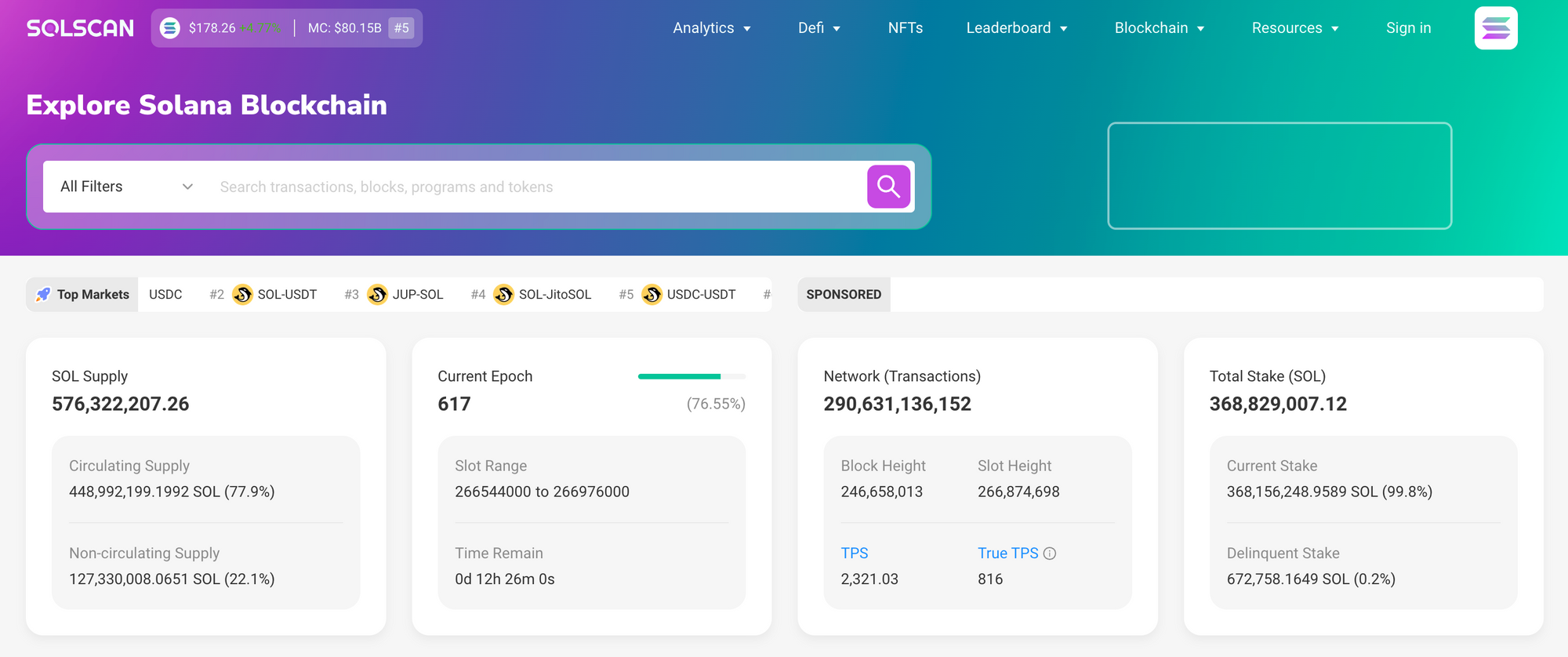
First impressions matter. Hmm… Solscan’s UI feels familiar in a reassuring way. Really? Yes. The layout gives you block, tx, and token views up front, so you don’t have to hunt. On one hand, that feels simple and user-friendly. On the other hand, power users get advanced filters and CSV exports tucked into menus—so it’s both approachable and capable.
Here’s what bugs me about a lot of explorers: they look pretty but are slow under load. Something felt off about many of them when traffic spikes hit. Solscan doesn’t choke as quickly. That reliability is huge when a mint or airdrop goes viral and every second counts.
How I Use It, and Why It Beats the Rest (For Me)
I’m biased, but I start here for quick forensic checks. Whoa! If a transaction fails, I want to know why—was it a compute budget problem, a duplicate nonce, or a front-end bug? Solscan surfaces logs and inner instructions in a way that reads like a story, not a raw dump. Initially I thought raw logs were enough, but then I realized that context—what program was called, which accounts changed—is what lets you move from blame to fix.
For dev debugging I lean on the decoded program interactions. Seriously? Yep. The explorer decodes common program instructions so I don’t have to jump into the source every time. That saves me minutes, and minutes add up when you’re iterating on contracts or testing new transaction flows.
For traders and collectors, the token and market pages matter. On Solana, tokens move quickly and new tokens pop up all the time. Solscan’s token holder lists and NFT transfers make attribution straightforward. I’m not 100% sure about attribution heuristics for every contract, but the explorer gives enough signals to form a useful hypothesis fast.
Oh, and by the way… the CSV export feature is underrated. You can pull transaction histories for an address, then slice and dice them in a spreadsheet. It feels low-tech and very practical. Many pro analysts will tell you the same thing—the ability to get the raw numbers quickly beats fancy charts when you’re doing due diligence.
Under the Hood — What Makes an Explorer Actually Useful?
Speed. Accuracy. Context. Those are three pillars I watch for. Wow! Speed without accurate indexing is worthless. If the explorer shows the wrong block time or misses an inner instruction, you might chase a ghost. Solscan’s indexing is competitive; they aggregate RPC data and enrich it with heuristics so entries are timely and usually correct.
Context matters even more. My first thought was that transaction logs alone would do the job. Actually, wait—let me rephrase that—logs are necessary but insufficient. Humans need readable context: program names, decoded instruction types, token metadata, and transfer routes. Solscan stitches these pieces together, so you can interpret a complex swap across multiple AMMs without having to reconstruct the whole flow from raw events.
On one hand, explorers are also products. They have to balance ad revenue, uptime, and feature requests. On the other hand, they must stay trustworthy. Solscan trades off minimal UI clutter for utility, though sometimes that makes the site feel a little dense if you’re brand new. I’m not saying it’s perfect—nothing is—but it’s pragmatic in all the useful ways.
When Solscan Isn’t Enough
Sometimes you need deeper traces or a history that goes back further than the cached index. Hmm… that happens. Nodes go down, or a program emits custom logs that the explorer hasn’t learned to decode yet. In those cases I fall back to raw RPC queries or my own local indexer. It’s a pain, but it reminds you that explorers are complementary tools, not single-source truths.
Also, privacy buffs will balk at public indexing. Of course; every public transaction is on-chain. Explorers just make it easier to correlate addresses. That’s not new, and it’s not malicious—just a reality of public blockchains. Be mindful, and don’t reuse addresses for things you want private; sounds obvious, but people slip up.
Something else—rapid UI changes can be jarring. I once refreshed during a high-load event and the site momentarily showed partial data. Double data display, very very confusing. Thankfully it resolved, but that memory makes me cautious during big launches.
Want to Try It? A Small Recommendation
If you want a single place to start your Solana digging, try Solscan and form your own view. Check this out—use the search box, pull a transaction, then click through inner instructions and accounts. You’ll see token mints, transfers, and program calls inline. I keep a bookmark to the address search and revisit it when something smells weird. If you’re curious, click here for the official entry point.
FAQ
Is Solscan free to use?
Yes. Mostly. It’s free for general browsing and basic exports. They may offer premium tools or rate limits for heavy API usage, so for intensive analytics you’ll want to check their API terms or host your own indexer.
Can I trust the decoded instructions?
Decoded instructions are accurate for well-known programs. For new or custom programs, the explorer does its best but might not fully decode every nuance. If exact correctness matters, validate against the program’s source or logs pulled directly from an RPC node.
All told, explorers like Solscan are the kind of small infrastructural tool that quietly saves hours. I’m not pronouncing it holy, though—use it with other tools and a dash of skepticism. The ecosystem is fast, messy, and brilliant all at once… and I love that about working with Solana.